Bolt tensioning and hydraulic torque wrenching are both methods of achieving a target bolt load in bolted joints — but they work very differently. Understanding the distinction is important when specifying the right method for pressure-critical, structural, or subsea bolting applications.
How Hydraulic Torque Wrenching Works
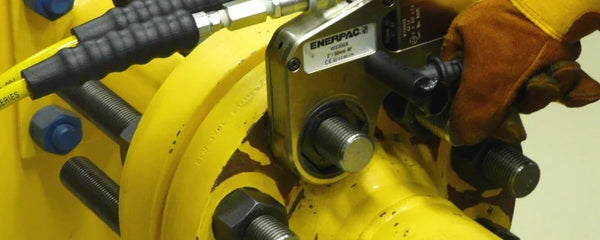
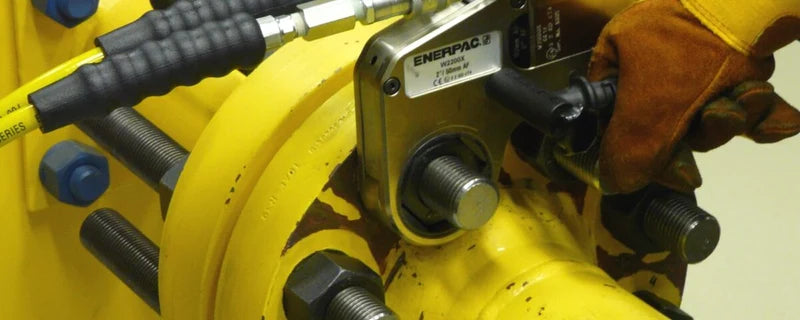
A hydraulic torque wrench applies rotational force (torque) to a nut, turning it down the thread until the bolt stretches to the desired tension. The bolt load is an indirect result of the applied torque — converted via the relationship between torque, friction, and thread geometry.
The problem is that friction is variable. Thread condition, lubrication, flange face finish, and nut hardness all affect the torque-to-tension relationship. In practice, the same applied torque can produce bolt loads that vary by 25–30% from the target — even under controlled conditions.
How Bolt Tensioning Works
A bolt tensioner is a hydraulic cylinder that fits over the exposed end of a stud bolt. When pressurised, it pulls the stud directly — stretching it axially to the precise target load. While the stud is under load, the nut is run down by hand (it is now in a compression-free condition). When the tensioner is depressurised, the stud tries to spring back, and the nut carries the load.
Because the load is applied directly to the bolt — with no frictional component — bolt tensioning achieves much tighter load accuracy than torquing: typically within 5–10% of target load.
Key Differences at a Glance
- Load accuracy: Torque wrenching ±25–30% vs. bolt tensioning ±5–10%
- Friction dependence: Torque wrenching is highly dependent on friction; bolt tensioning has none
- Simultaneous multi-bolt: Tensioning supports multiple bolts simultaneously; torquing is sequential
- Equipment cost: Torque wrenching is lower cost; tensioning equipment is higher cost
- Fastener requirement: Both work with stud bolts; only torque wrenches work with standard hex bolts
When to Use Bolt Tensioning
Bolt tensioning is the preferred method when:
- High accuracy is required — pressure vessel flanges, subsea connections, and critical structural joints where bolt load must be verified and documented
- Simultaneous tensioning is specified — many pressure vessel and pipeline flange standards require all bolts to be tensioned simultaneously to avoid flange distortion
- Stud bolts are used — tensioners require an exposed stud end to grip; standard hex bolts cannot be tensioned
- Large bolt counts need to be completed quickly — multiple tensioners working simultaneously can dramatically reduce bolting time on large flanges
When Torque Wrenching is the Right Choice
Despite the accuracy advantage of tensioning, hydraulic torque wrenching remains the standard for most industrial bolting because:
- Most standard bolted joints don't require tensioning-level accuracy
- Hex bolts cannot be tensioned — only stud bolts
- Equipment cost is significantly lower
- Torque wrenches are more versatile across different joint types and access conditions
Controlled Bolting from AD Automation
AD Automation is an Authorised Enerpac Distributor and Service Centre, supplying the full range of Enerpac hydraulic torque wrenches and bolt tensioners — available for purchase or hire. Our team can advise on the correct bolting method, tool selection, torque and tension settings, and complete bolting procedures for your specific application.
Learn more about our bolting and torque tools, or request a quote for supply or hire. Call us on (03) 9798 7522.