Choosing the right hydraulic torque wrench for your application is critical. The wrong tool can lead to inaccurate bolt loads, damaged fasteners, and — in pressure-critical applications — potentially dangerous joint failures. This guide walks through the key selection criteria so you can specify the right tool the first time.
Understand Your Required Torque Range
The most fundamental selection criterion is the torque value you need to achieve. Hydraulic torque wrenches are available in a wide range — from around 200 Nm to over 100,000 Nm — and each tool has a defined operating range. Your target torque value should sit comfortably within the tool's mid-range for best accuracy; avoid operating at the extreme high or low end of a tool's rated capacity.
To find your target torque, refer to the relevant standard (AS 4100 for structural steel, ASME PCC-1 for pressure vessel flanges) or the equipment manufacturer's bolting specification. If you're unsure, our team at AD Automation can assist with torque calculations.
Square Drive vs Low-Profile (Cassette) Type
Hydraulic torque wrenches come in two main configurations:
- Square drive wrenches use a standard square drive (typically 1" or 1½") and are used with impact-rated drive sockets. They're versatile, easy to set up, and suitable for most above-ground flange bolting applications where clearance is adequate.
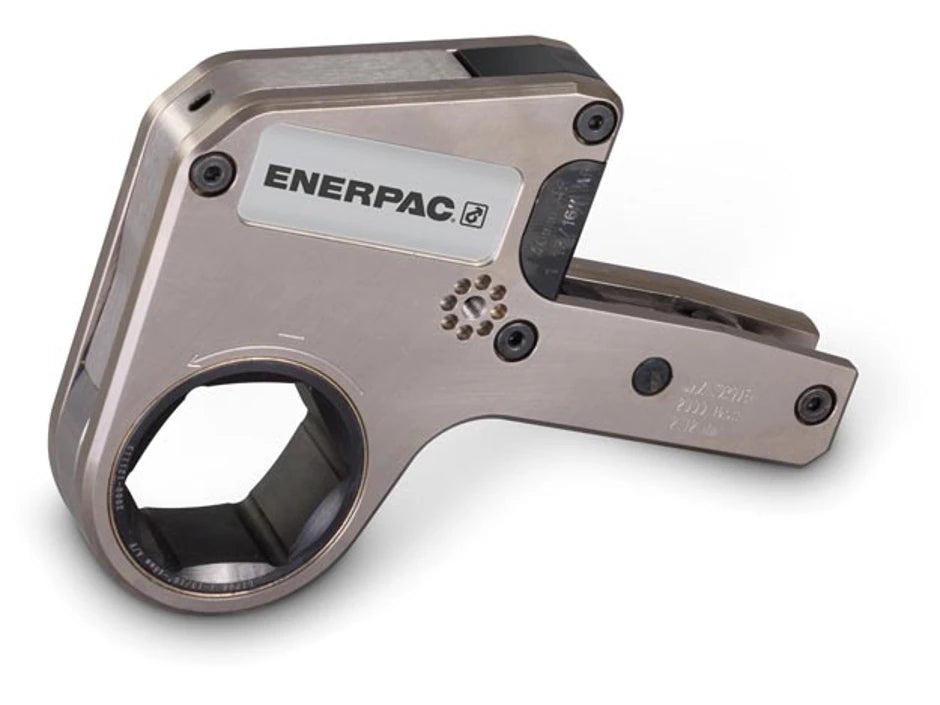
- Low-profile (cassette) wrenches have a thin, U-shaped head that fits directly over the nut. They're designed for confined spaces — such as subsea connections, pipe flanges with close bolt spacing, and applications inside machinery where a square drive tool simply won't fit.
In practice, most maintenance teams use square drive wrenches for the majority of applications and keep a low-profile tool on hand for confined-space jobs.
Consider the Reaction Arm
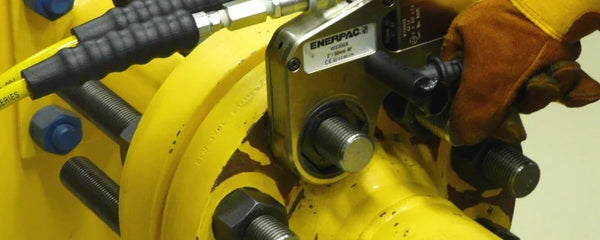
All hydraulic torque wrenches require a reaction point — typically a reaction arm that braces against the next bolt, a flange face, or a structural member. Before selecting a wrench, consider where the reaction arm will brace in your specific application. Tight clearances, recessed flanges, or rotating equipment can all make standard reaction arms unsuitable.
Enerpac offers a wide range of interchangeable reaction feet and custom reaction solutions. When in doubt, share your application photos or drawings with our team — we can often identify the correct reaction setup before you order.
Check Bolt Size and Drive Socket Compatibility
Your wrench must be compatible with the bolt or nut size you're torquing. For square drive tools, this means selecting the correct impact-rated hex socket for your fastener size. For low-profile tools, the cassette must be specified to suit the exact hex or square size of the nut.
Drive socket sets are available in metric and imperial, and in a range of drive sizes. AD Automation can supply complete socket sets to match Enerpac tool specifications.
Electric or Pneumatic Pump Set
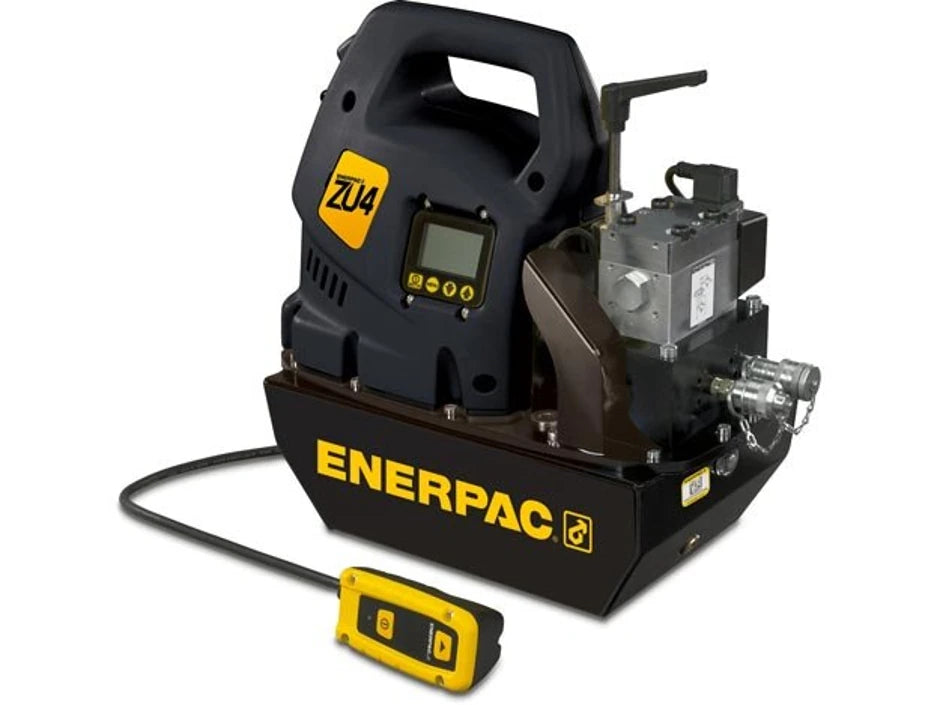
The torque wrench is only part of the system — you also need to specify the correct hydraulic pump set. Pump sets are available in:
- Electric (mains-powered) — most common for fixed plant and workshop use
- Pneumatic (air-powered) — preferred in hazardous areas (Ex-rated) or where mains power isn't available
- Battery-powered — for remote locations with no mains or air supply
High-flow pump sets are available for larger tools requiring faster cycling — this matters on large shutdown jobs where bolting productivity is important.
Hire or Buy?
If your bolting requirements are infrequent — a single shutdown job, a one-off installation — hiring a hydraulic torque wrench from AD Automation is often more cost-effective than purchasing. Our hire fleet includes Enerpac square drive and low-profile wrenches, reaction arms, socket sets and pump sets, available for short and long-term hire Australia-wide.
For teams with regular bolting requirements, purchasing gives you tool availability, familiarity, and long-term cost savings. We can supply the full Enerpac bolting range and provide advice on the right tools for your ongoing needs.
Get Expert Advice
Torque wrench selection is not always straightforward — bolt size, torque specification, access constraints and duty cycle all play a role. The team at AD Automation has extensive experience in controlled bolting across mining, oil & gas, infrastructure and heavy manufacturing.
Contact us for a bolting consultation or call our technical team on (03) 9798 7522 — we're happy to recommend the right tool for your application.